

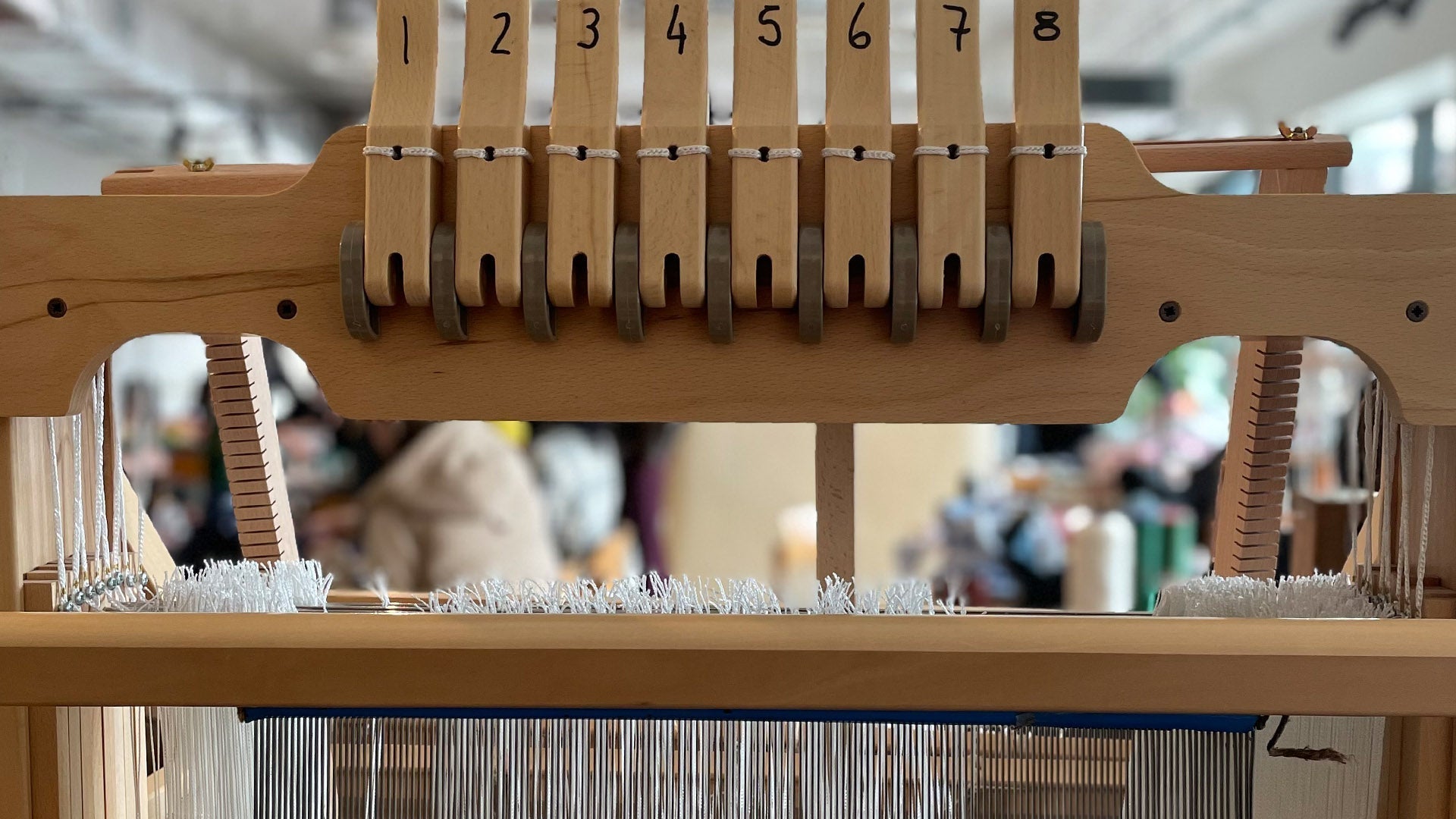
What if the future of fashion isn’t global, but radically local?
Last week, I had the privilege of being invited to speak at the Makers Camp: The West African Project, organised by Central Saint Martins.
It wasn’t really an “event” in the usual sense. It felt more like a working studio. A space where people were making, sharing, testing ideas, and learning from each other in real time.
 Bringing together first-year MA Fashion students, UK-based makers-in-residence, West African designers, and journalist Ugonna-Ora Owoh, the camp created a rare kind of exchange. It was hosted at Mason & Fifth, which became part workshop, part living space, part shop. Full of materials, conversations, and a quiet sense that something important was being explored.
What made it feel different was the mix of practices and perspectives in the room.
Designers like Travis Obeng-Casper, whose brand AJABENG explores Afro-minimalism and storytelling through clothing, and Peter Acha of Pettre Taylor, who is building systems around making that centre learning, earning, and giving back.
Alongside them were UK-based makers working in very different ways. Paolo Carzana, working with plant-based and repurposed materials and natural dyes. Ruth Kent, exploring colour and woven textiles. Yahvi Duggal, creating fabrics from food waste like avocado pits and banana skins. Each practice approaches sustainability not as a fixed idea, but as something lived and evolving.

Others, like Wolfgang Woerner, working with discarded materials to build new meaning, or Jessica Light, one of the last passementerie makers in London, quietly holding onto and evolving endangered craft skills, added another layer to the conversation around what we choose to keep, and why.
There were also people working at a systems level. Eugene Ewusi-Annan, building training programmes around circular fashion in Ghana. Yayra Agbofah, working within Kantamanto market to turn textile waste into opportunity. And Omoyemi Akerele and Adaeze Oguzie, who are shaping the wider African fashion ecosystem through Lagos Fashion Week and beyond.
What became very clear, very quickly, is that “local” means something completely different depending on where you are standing.

I was invited by the brilliant Bernie Yates to join a panel of voices, and my contribution centred around something that feels increasingly important to us at Palava.
We don’t need to think bigger. We need to think more locally.
Through the Hatchery, we’ve been exploring what that could look like. Making closer to home. Understanding materials better. Building systems that are smaller, but more connected.
For students about to enter the fashion industry, having the space to question the system before stepping into it feels incredibly powerful.
But what really stayed with me were the conversations around where our clothes go.
Speaking alongside voices connected to West Africa brought into focus the reality of what happens to garments once they leave the UK. How they often end up thousands of miles away, in markets and on beaches, far removed from where they were designed or worn.
And yet, West Africa is not just part of that story as a recipient. It is home to a thriving, complex, and deeply resourceful fashion ecosystem. One that understands locality, material use, and value in ways we have a lot to learn from.

The conversation wasn’t about choosing between global or local. It was about understanding how the two can coexist more responsibly. And how we might begin to rebalance that relationship.
It was also inspiring to see the launch of the WOOL Exchange Zine by BA Fashion Journalism students. A reminder that the next generation is already thinking differently and beginning to reshape the narrative.
There’s a shift happening.
You can feel it in spaces like this. Where collaboration replaces extraction. Where knowledge is shared, not taken. And where making is valued again, not just the outcome.
And if we’re serious about the future of fashion, that shift can’t come soon enough.


Leave a comment
This site is protected by hCaptcha and the hCaptcha Privacy Policy and Terms of Service apply.